Here is a short video explaining the process, scroll down for detailed ingredients and step by step recipe method. Thanks for coming and do not forget to check other recipes on our homepage.
Table of Contents
Ingredients with Exact Amounts
Getting the ingredients right before you start is the most important thing you can do. Fried pickles have a short cook time, so once the oil is hot, things move fast. Having everything measured and ready to go means you won’t be scrambling mid-fry. Below are all the ingredients broken down by what they do, so you understand the purpose of each one and not just the amount.
For the Pickles
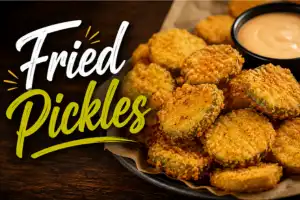
The star of the show is 1½ cups of sliced dill pickle chips. You can also use 3 whole kosher dill pickles and slice them yourself to just under ¼-inch thick. Dill pickles are the classic choice here because their tangy, briny flavor holds up beautifully against the rich fried coating. If you slice your own, try to keep the thickness consistent so they all cook at the same rate. You’ll also want a generous stack of paper towels on hand, because drying the pickles properly before coating them is one of the most important steps in the entire recipe — more on that shortly.
For the Dry Coating (Bowl 1)
This is your first layer and the foundation of the crispy crust. You’ll need 1 cup of all-purpose flour, 1 teaspoon of baking powder, 1 teaspoon of garlic powder, 1 teaspoon of onion powder, 1 teaspoon of paprika, ½ teaspoon of cayenne pepper (optional if you want a little heat), ½ teaspoon of salt, and ¼ teaspoon of black pepper. The baking powder is the not-so-secret ingredient that makes the coating puff up slightly and get extra crispy when it hits the hot oil. Don’t skip it — it genuinely makes a difference you’ll notice.
For the Wet Batter (Bowl 2)
The wet mixture is what helps your dry coating stick to the pickle slices. You’ll need 2 large eggs and ½ cup of whole milk. If you have buttermilk on hand, use that instead — it adds a subtle tang that plays off the pickle flavor really nicely. You can also add 1 teaspoon of hot sauce to the egg mixture if you want a gentle kick running through the whole coating. Beat everything together until it’s smooth and well combined before you start dipping.
For the Outer Crunch (Bowl 3)
This is the outer shell that gives fried pickles their signature crunch. Use 1 cup of Panko breadcrumbs and 1 teaspoon of dried dill weed. Panko is a Japanese-style breadcrumb that is lighter and flakier than regular breadcrumbs, which means it fries up crispier and stays crunchy longer. If you only have regular breadcrumbs, they’ll still work, but Panko is worth picking up if you can. The dried dill adds a subtle herby flavor that echoes the pickle and makes the whole thing taste more intentional and well-seasoned.
For Frying
You’ll need enough vegetable oil, canola oil, or peanut oil to fill your pot 2 to 3 inches deep. These oils have a high smoke point, which means they can handle the heat without breaking down or giving your food an off flavor. Do not use olive oil for this — it smokes at lower temperatures and will ruin the flavor. You’ll also need a clip-on oil thermometer, which is genuinely non-negotiable. Guessing the oil temperature is how you end up with either greasy soggy pickles or burnt ones, and a thermometer costs almost nothing and fixes that problem completely.
For the Dipping Sauce (Quick Zesty Ranch)
This simple sauce takes about 30 seconds to mix together and it’s the perfect complement to the fried pickles. Combine 2 tablespoons of ranch dressing, 1 tablespoon of BBQ sauce, 1 teaspoon of ketchup, 1 teaspoon of mayonnaise, a dash of Tabasco sauce, and a pinch of black pepper. Stir it all together and refrigerate until you’re ready to serve. It’s creamy, tangy, slightly smoky, and has just enough heat to balance the richness of the fried coating. You can also just use straight ranch if you want to keep it simple — that works great too.
Step-by-Step Recipe Method
This is the core of everything, so read through all the steps once before you start. It’s a quick process once the oil is hot, and knowing what’s coming next keeps you calm and in control. Follow the steps in order and you’ll get golden, crispy fried pickles every single time.
Step 1 — Dry the Pickles Thoroughly
Lay all your pickle slices out in a single layer on a double stack of paper towels. Then take another paper towel and press gently down on top of them to absorb moisture from both sides. Don’t rub — just press and hold for a few seconds. After that, leave them sitting out for 5 to 10 minutes so any remaining surface moisture can evaporate. This step sounds fussy but it is genuinely the most important thing you will do in this entire recipe. Moisture is the enemy of a crispy coating. If the pickles are wet when you start breading them, the coating won’t stick properly, and when the wet pickle hits the hot oil, the steam created underneath lifts the coating right off. Take your time here and don’t rush it.
Step 2 — Heat the Oil
Pour your oil into a Dutch oven or a heavy-bottomed saucepan and fill it to about 2 to 3 inches deep. Clip your thermometer to the side of the pot, making sure the tip is submerged in the oil but not touching the bottom of the pan. Set the heat to medium and let the oil come up to temperature slowly. You’re aiming for 350°F to 375°F. This usually takes around 8 to 10 minutes depending on your stove. While the oil is heating, you have the perfect window to set up your breading station and coat your pickles. Never walk away from heating oil, especially once it gets close to temperature. If it starts smoking, your heat is too high — lower it immediately and let it come back down before you start frying.
Step 3 — Set Up Your Three-Bowl Breading Station
Line up three bowls side by side on your counter, with a clean baking sheet or plate at the end to hold the coated pickles. In Bowl 1, whisk together all the dry coating ingredients — the flour, baking powder, garlic powder, onion powder, paprika, cayenne, salt, and black pepper — until everything is evenly combined. In Bowl 2, beat together the eggs, milk, and hot sauce (if using) until completely smooth. In Bowl 3, combine the Panko breadcrumbs and dried dill and stir to mix them through. One important note on Bowl 3: only put a small amount of Panko in at a time and top it up as you go. Once Panko gets wet from contact with the egg-coated pickles, it clumps together and stops coating evenly. Keeping it in smaller portions and refreshing it is a small habit that makes a big difference.
Step 4 — Coat the Pickles Using the Three-Step Dredge
Take a dried pickle slice and drop it into Bowl 1. Press it gently into the flour and flip it to coat both sides, then shake off any excess flour. You want a light, even dusting — not a thick clump. Then move it straight into Bowl 2 and let it sit for just a second so the egg wash coats it properly, then lift it out and let the excess egg drip back into the bowl. Finally, lay it into Bowl 3 and press both sides firmly into the Panko so the crumbs stick well. Set the coated pickle on your baking sheet and repeat with the remaining slices. Once you’ve coated all of them, let them sit for 3 to 5 minutes before frying. This resting time is important — it allows the coating to fully bond to the pickle surface so it doesn’t slide off in the oil.
Step 5 — Fry in Small Batches
Once your oil is at temperature and your pickles have rested, it’s time to fry. Using a slotted spoon or a spider strainer, gently lower 3 to 5 pickle slices into the oil one at a time. Never drop them in from above — slide them in slowly along the edge of the spoon so they enter the oil smoothly without splashing. Pickle slices will float almost immediately, which is normal. Because they float, only the bottom side is submerged, so you need to flip them halfway through cooking. Let them fry for about 1 to 1½ minutes on the first side until they are golden brown, then flip and cook for another 1 to 1½ minutes on the second side. Total fry time per batch is about 2 to 3 minutes. After each batch, check your thermometer and let the oil come back up to temperature before adding the next batch. If you add pickles to oil that’s dropped below 340°F, they will absorb oil instead of crisping up and come out greasy.
Step 6 — Drain, Salt, and Serve Immediately
Remove the fried pickles with your slotted spoon and transfer them to a wire rack set over a baking sheet, or directly onto a paper towel-lined plate. The wire rack is actually the better option because it lets air circulate underneath, keeping the bottom of the pickles crispy while the others drain. As soon as each batch comes out of the oil, sprinkle them immediately with a small pinch of salt while they’re still hot — the salt adheres better right out of the fryer and enhances everything. Serve them within 5 minutes if possible. Fried pickles are one of those foods that are at their absolute best fresh and hot, and they do start to soften as they sit. Set out your dipping sauce, and enjoy.
Variations in the Recipe
Once you’ve nailed the base recipe, there are so many directions you can take it. These variations aren’t complicated — most of them just swap out one or two ingredients — but they give you a completely different end result each time.
Beer-Battered Fried Pickles
If you want that thick, bubbly, pub-style coating you get at a bar, go with a beer batter. Skip the three-bowl method and instead whisk together ¾ cup of cold beer (a light lager works best), ½ cup of all-purpose flour, ½ teaspoon of garlic powder, salt, and pepper into a smooth batter. Dip your dried pickle slices directly into the batter, let the excess drip off, and fry as normal at 375°F. The beer creates carbonation in the batter that makes it puff up beautifully in the hot oil, giving you a thicker, crunchier shell. This variation works especially well with pickle spears rather than chips, because the spear shape holds up to the heavier batter. Serve with a cold beer on the side and it feels like a proper bar snack.
Southern Cornmeal-Crusted Fried Pickles
This is the old-school Southern way to fry pickles, and it gives you a grittier, more rustic crunch that is deeply satisfying. Instead of Panko in Bowl 3, use ½ cup of fine yellow cornmeal mixed with ½ cup of flour. Keep the same seasonings but push the cayenne to a full teaspoon and add a pinch of white pepper for that classic Southern heat. The cornmeal coating is slightly denser than Panko but it fries up with a wonderful texture that feels more like something your grandmother would have made. It pairs especially well with a tangy remoulade or a creamy comeback sauce for dipping.
Air Fryer Fried Pickles
If you want all the flavor with significantly less oil, the air fryer does a surprisingly good job here. Bread your pickles exactly the same way as the base recipe, then arrange them in a single layer in your air fryer basket — don’t overlap them or they’ll steam instead of crisp. Spray them generously with cooking spray or a light mist of oil, then cook at 400°F for 7 to 9 minutes, flipping once at the halfway point and spraying the other side. They won’t be identical to the deep-fried version — nothing replicates that exact crunch — but they’re still genuinely crispy and delicious, and you can make multiple batches with far less mess and cleanup.
Spicy Fried Pickles
For people who love heat, this version takes the base recipe and amplifies the spice on every level. Start by using jalapeño pickle chips or spicy dill pickles as your base — the heat is already built into the pickle itself before you even add anything. Then stir 1 teaspoon of Cajun seasoning and an extra ½ teaspoon of cayenne into the dry coating mix. If you’re adding hot sauce to the egg wash, double the amount. For dipping, mix equal parts ranch and sriracha, or serve with a chipotle mayo made from 3 tablespoons of mayo and 1 teaspoon of adobo sauce from a can of chipotles. Every element is turned up, and the result is a spicy, tangy, crunchy snack that is seriously addictive.
Baked Fried Pickles (Oven Method)
This is the right move when you want fried pickles without the fuss of hot oil on the stove. Bread your pickles using the exact same three-bowl method, then place them on a wire rack set inside a rimmed baking sheet. Spray them lightly with cooking spray on both sides. Bake at 450°F for 15 to 20 minutes, flipping once at the 10-minute mark. They come out noticeably less crispy than the deep-fried version — that’s just the honest truth — but they still have good flavor and a satisfying bite. They’re a solid choice for feeding a crowd when you don’t want to babysit a pot of oil, and they’re far easier to make in large quantities all at once.
Mistakes to Avoid
Most fried pickle failures come down to the same handful of mistakes. Knowing them in advance means you can sidestep all of them on your very first try.
Not Drying the Pickles Enough
This is by far the most common mistake, and it wrecks the whole recipe if you don’t fix it. When a wet pickle goes into flour, the moisture mixes with the flour and creates a gummy paste instead of a light dusting. That paste doesn’t adhere properly to the egg wash, and the whole coating ends up sliding off in the oil. Beyond the coating issue, wet pickles also create steam when they hit the hot oil, and that steam pushes up from underneath the coating and lifts it right off the pickle. The solution is simple: pat dry, let rest, pat dry again, and don’t rush this step. Five to ten minutes of patience here saves the entire batch.
Frying at the Wrong Oil Temperature
Oil temperature is everything in frying, and getting it wrong in either direction gives you a bad result. If the oil is too cold — below 340°F — the pickles sit in the oil and slowly absorb it instead of crisping up. The coating becomes heavy, greasy, and soft, and the pickles taste like they’ve been soaked in oil rather than fried. If the oil is too hot — above 390°F — the outside coating burns before the inside has a chance to set properly, and you end up with a dark, bitter exterior that doesn’t taste good. The sweet spot is 350°F to 375°F, and the only reliable way to hit that sweet spot is with a thermometer. Checking by appearance or by dropping in a piece of bread is not accurate enough for this recipe.
Overcrowding the Pan
It’s tempting to throw all your coated pickles in at once and get it done faster, but overcrowding the pan is a guaranteed way to ruin them. When you add too many pickles at once, the oil temperature drops sharply — sometimes by 30 to 50 degrees — because the cold pickles pull heat out of the oil faster than your stove can replace it. Once the temperature drops that far, you’re no longer frying — you’re simmering in oil, and the coating absorbs oil and goes limp instead of crisping. Stick to batches of 3 to 5 slices at a time, and always wait for the oil to come back up to temperature between batches. It takes a little longer but the results are completely different.
Skipping the Resting Time After Breading
A lot of people coat their pickles and drop them straight into the oil without waiting, and then wonder why the coating falls off in the pan. The coating needs 3 to 5 minutes of rest time after breading to properly adhere to the surface of the pickle. During this time, the egg in the batter begins to set slightly and the flour forms a bond with the pickle surface. When you skip this step and go straight to frying, the coating is still loosely attached, and the turbulence of the hot oil shakes it free almost immediately. It’s a quick and easy fix — just bread your pickles first and let them sit on the baking sheet while the oil finishes coming up to temperature.
Using Wet or Clumped Panko
Panko starts losing its effectiveness the moment it makes contact with the wet egg-coated pickles. As you dip pickle after pickle into Bowl 3, the Panko picks up moisture and starts to clump, and those clumps don’t adhere to the pickle surface the way loose, dry Panko does. The solution is to work with small amounts in the bowl and replenish it with fresh, dry Panko every few pickles. This is a small habit that takes no extra effort but makes a noticeable difference in how evenly and thoroughly each pickle is coated.
Serving Them Late
Fried pickles are one of the most time-sensitive foods you can make. They are spectacular for about the first five minutes after they come out of the oil, and then they start softening fairly quickly as the steam from inside the pickle works its way out through the coating. If you’re making them for guests, time the frying so the first batch comes out right as people are ready to eat. If you need to keep them warm briefly, place them on a wire rack in a 200°F oven — never cover them, and never stack them, as the trapped heat and steam will kill the crunch fast. If you have leftovers, reheat them in an air fryer at 400°F for 3 to 4 minutes. Never microwave them — that turns the coating completely soft and rubbery.
Conclusion
Fried pickles are the kind of recipe that sounds impressive but is actually very straightforward once you know what you’re doing. The keys are simple and consistent: dry your pickles completely, keep your oil at the right temperature, fry in small batches, and serve them hot. Follow those four principles and you’ll turn out a plate of perfectly golden, incredibly crispy fried pickles every single time. Whether you go with the classic base recipe or branch out into the beer-battered or spicy versions, the process is the same and the result is always something people go back for seconds on.
Once you make these at home, you’ll stop ordering them at restaurants. They take 20 minutes, they cost a fraction of what you’d pay out, and you can customize them exactly to your taste. Make a batch for your next game day, bring them to a cookout, or just make them on a Thursday because you’re craving something really good. Pair them with that quick zesty ranch sauce and they’ll be gone before you’ve even sat down. Try a variation next time you make them — spicy one week, beer-battered the next — and you’ve got a recipe you’ll come back to for years.
FAQs
What kind of pickles work best for frying?
Dill pickle chips are the classic choice and the easiest to work with. They’re already sliced to a good thickness, they cook evenly and quickly, and their tangy, briny flavor holds up beautifully against the rich fried coating. If you want a bigger, bolder pickle experience in every bite, pickle spears are a great option — they’re thicker and juicier in the center, just give them an extra minute in the oil. Avoid sweet or bread-and-butter pickles for frying, as the sugar content causes them to darken and taste bitter in the hot oil.
Do I need a deep fryer to make fried pickles?
Not at all. A Dutch oven or any heavy-bottomed saucepan works perfectly well. The heavy base holds heat evenly and helps maintain a consistent oil temperature, which is really what matters. The only tool you truly need beyond the pot is an oil thermometer — that clip-on style that hangs on the side of the pan costs just a few dollars and completely takes the guesswork out of frying. If you have those two things, you have everything you need.
Why does my coating keep falling off in the oil?
There are usually two reasons this happens. Either the pickles weren’t dried thoroughly enough before breading — leftover moisture creates steam that pushes the coating off from underneath — or the coated pickles went straight into the oil without that 3 to 5 minute resting period after breading. Both of these steps give the coating time to properly bond to the pickle surface. If you’re doing both of those things and still having trouble, check that your oil is hot enough — oil that’s too cool lets the coating absorb oil and slide around instead of crisping up quickly and locking in place.
Can I make fried pickles ahead of time?
The fried pickles themselves are best served fresh, but you can absolutely do the prep work ahead of time. Bread all your pickle slices and lay them in a single layer on a parchment-lined baking sheet, then cover loosely and refrigerate for up to a few hours before frying. When you’re ready to serve, heat the oil and fry them straight from the fridge — the chilled coating actually adheres a little better going into the hot oil. If you have already-fried leftover pickles, refrigerate them and reheat in an air fryer at 400°F for 3 to 4 minutes to bring back as much crunch as possible.
What dipping sauces go well with fried pickles?
Ranch is the undisputed classic, and it’s that way for a reason — the cool, creamy, herby flavor is a perfect contrast to the hot, crunchy, tangy pickle. Beyond ranch, comeback sauce is a fantastic choice (mix ranch with a little sriracha and lemon juice), as is sweet chili sauce, chipotle mayo, tzatziki, or the simple BBQ ranch blend included in this recipe. If you’re serving these at a party, put out two or three sauces and let people mix and match — it turns a simple appetizer into something more interactive and fun.
Can I make fried pickles in an air fryer?
Yes, and they come out better than you might expect. Bread them exactly the same way as the base recipe, spray both sides generously with cooking spray, and cook at 400°F in a single layer for 7 to 9 minutes, flipping once halfway through. They won’t have quite the same crunch as the deep-fried version — the coating is a little less dramatic — but they’re genuinely crispy and full of flavor. If you’re feeding a smaller group or just don’t want to deal with a pot of hot oil, the air fryer version is a completely solid option.
How do I keep fried pickles crispy if I’m serving them at a party?
The most important things are airflow and timing. Always drain them on a wire rack rather than paper towels — the rack lets air circulate under the pickles so the bottoms don’t steam and go soft. If you need to keep them warm while you fry more batches, slide the rack into a 200°F oven. Never cover them, never stack them, and never put them in a sealed container — all of those things trap steam and destroy the crunch. Try to time the frying so the last batch comes out right when guests are ready to eat rather than having them sit around waiting.
What oil is best for frying pickles?
Stick with a neutral oil that has a high smoke point — vegetable oil, canola oil, and peanut oil are all excellent choices. They can handle the 350 to 375°F temperature range without breaking down or developing an off flavor. Peanut oil in particular gives fried food a very clean, neutral taste and holds temperature well, which is why it’s popular in Southern cooking. Whatever you choose, avoid olive oil — it smokes at a much lower temperature, which means it’ll be putting out smoke before your oil is even hot enough to fry, and it gives the food a distinctly savory flavor that doesn’t belong here.